← Selected work

Enterprise Product Design

Juniper Support Insights

Designing complex support and analytics experiences that help network teams understand issues faster and make better decisions.

Role
UX Designer / Product Consultant
Timeline
2021–2025
Focus
Enterprise Product Design

The problem

How might we help users understand complex support information without overwhelming them?

Support environments bring together dense technical information, changing conditions and multiple paths to resolution. The design challenge was to make that complexity easier to navigate without removing important context.
The solution

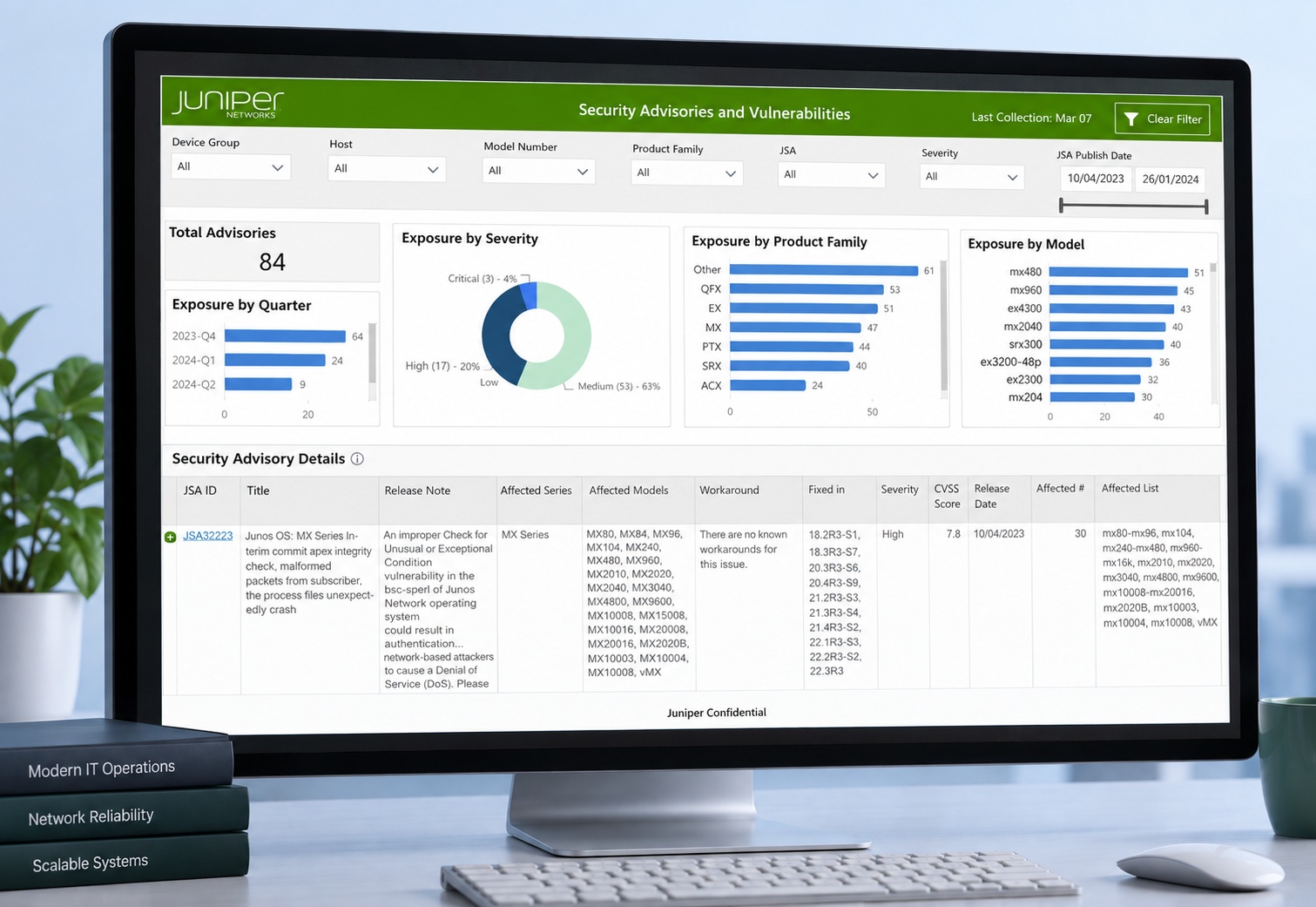
A clearer, insight-led experience that brings system health, emerging issues and relevant actions into one understandable view.

When information is fragmented or presented with equal weight, people spend more effort interpreting the interface before they can begin solving the problem.

01 · OVERVIEW

A useful first read

A focused overview helps people orient themselves before moving into detail.

02 · INSIGHTS

Signals with context

Related data and supporting context sit together so an insight is easier to interpret.

03 · ACTION

A clear next step

Relevant actions appear at the point where a person is ready to investigate further.

Background

Context

Support environments bring together dense technical information, changing conditions and multiple paths to resolution. The design challenge was to make that complexity easier to navigate without removing important context.
Why this problem mattered

When information is fragmented or presented with equal weight, people spend more effort interpreting the interface before they can begin solving the problem.

My role

UX Designer / Product Consultant

FigmaResearchPrototypingDesign SystemsPower BI

Research

Understanding the people behind the problem.

The process brought together available product context, research artifacts, journey thinking and usability observations to identify where clarity mattered most.

Research synthesis
Identifying recurring pain points and opportunities.

Journey mapping
Connecting information needs across the experience.

Early concepts
Making assumptions visible enough to discuss and test.

Research insights

01

People need to understand what matters before exploring the detail.

02

Complex information becomes more useful when it connects to a clear action.

03

Hierarchy is essential when everything feels important.

04

People need confidence that they understand the situation correctly.

Define

Turning research into a clear opportunity.

How might we…

Help users quickly understand important support insights and confidently decide what to do next?

Ideation

Exploring different ways forward.

01

Dashboard-first

A broad overview before moving into detail.

02

Workflow-first

A guided path organized around key tasks.

03

Insight-first

Prioritized signals connected to context and action.

Design direction: The final approach combines a useful overview with insight-led paths, balancing orientation and action.

Design

Designing for clarity, not complexity.

01

Prioritizing information

Create a clear hierarchy around the insights most relevant to the current situation.

Interface detail supporting this design decision
02

Connecting insight to action

Let people move naturally from understanding an issue to investigating it.

Interface detail supporting this design decision
03

Reducing cognitive load

Group related information into sections that can be understood at a glance.

Interface detail supporting this design decision
04

Designing within the system

Improve the experience while maintaining consistency with the established product language.

Interface detail supporting this design decision

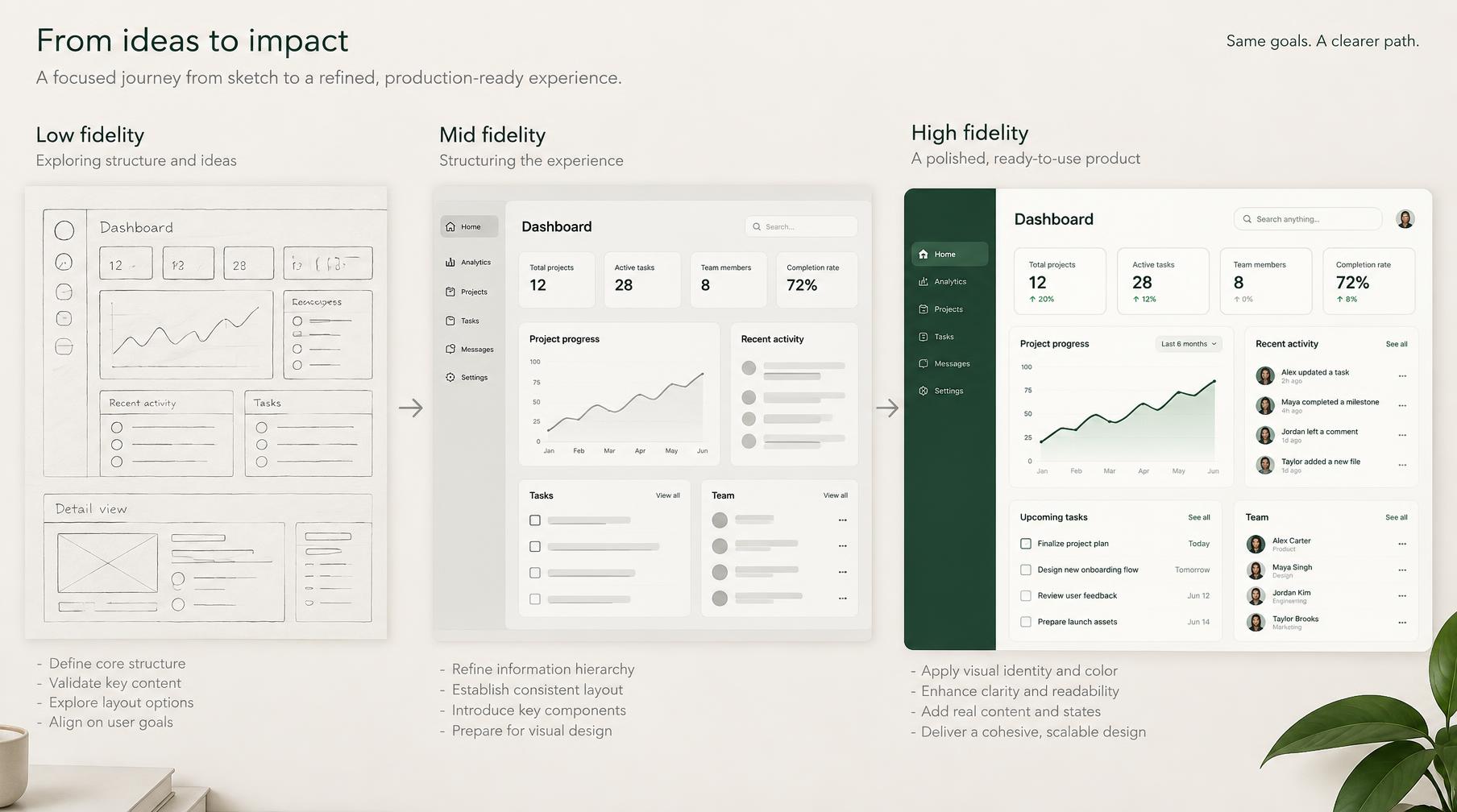
From wireframes to high-fidelity

Structure first. Detail with purpose.

Final design

An experience built to make the next decision clearer.

Testing & iterations

Design is never finished at the first version.

Concepts were evaluated around task flow, navigation and comprehension. The examples below describe qualitative design iterations rather than unverified results.

01

What we learned

Dense summaries made scanning harder than expected.

What changed

The hierarchy was simplified and secondary detail moved into progressive layers.

02

What we learned

Insight labels alone did not provide enough context.

What changed

Supporting explanation and next actions were brought closer to each insight.

Before / After

Refining hierarchy through iteration.

Earlier design direction
Refined design direction
BeforeAfter

Impact

What changed

Clearer information hierarchy

More intuitive paths through complex support information

Stronger alignment between user needs and product goals

Final thoughts

What I learned

The strongest simplification comes from understanding which decisions people need to make—not from removing detail indiscriminately.

What I’d explore next

I would continue exploring how adaptive explanations could support different levels of technical expertise.

What I’m most proud of

I’m most proud of creating structure around a complex domain while respecting the depth experts need.

Next project

Transport App (Coming Soon)

Continue reading
Transport App (Coming Soon) preview

Like what you see?

Let’s connect.

Have a product challenge, collaboration idea or just want to say hello? I’d love to hear from you.