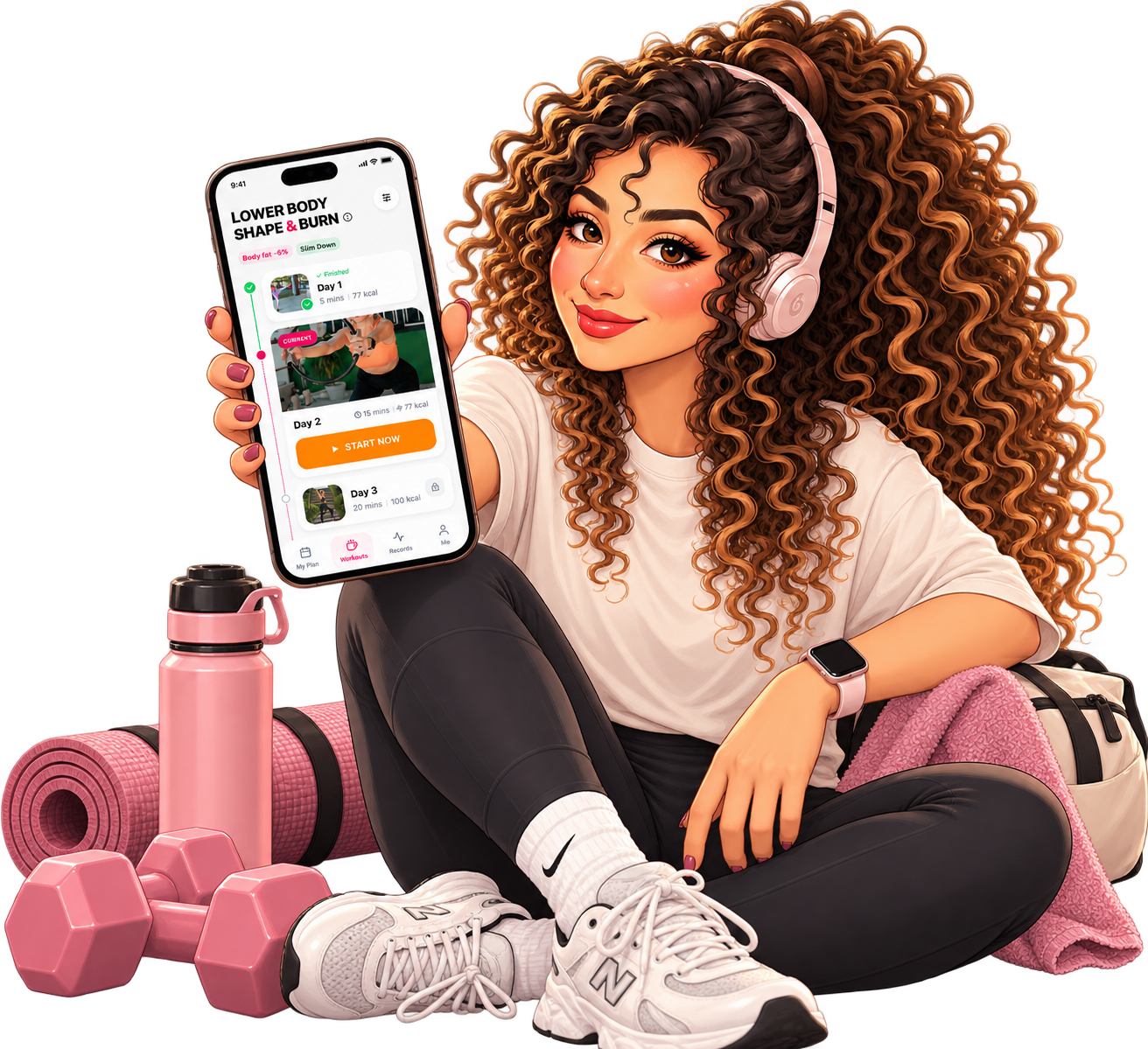
This project explores the design of an Active Workout Session experience for a fitness app used by personal trainers to assign customized workout plans to their trainees.
The goal was to improve workout adherence, usability, and engagement by addressing the diverse needs of users at different fitness levels.
Instead of a one-size-fits-all interface, the solution introduces three tailored experiences based on distinct user personas:
🌱01
A minimalist interface for beginners and elderly users
🎮02
A gamified experience for motivation-driven users
💪03
A data-driven interface for advanced athletes
The challenge was to balance simplicity, motivation, and performance tracking, while maintaining accessibility and consistency across all experiences.
We started by analyzing how people interact with fitness apps and identifying pain points for different user types. From this research, several key insights emerged:
Beginners are overwhelmed by too much information 😕
Motivation-driven users often lose consistency without rewards 📉
Advanced athletes need detailed performance tracking 📊
These insights allowed us to define three main personas, which guided all subsequent design decisions.
02
Ideation 💡
With personas in place, the ideation phase focused on tailoring features and interactions to each user type. We explored solutions for guidance, engagement, and performance tracking.
Key takeaways included:
Beginners require simplicity and clear guidance 🧭
Motivated users thrive with gamification and progress feedback 🎯
Athletes need flexibility, data dashboards, and control over inputs 📈
Interaction ideas such as swipe-based navigation, dynamic progress visuals, and detailed workout dashboards were sketched out at this stage.
03
Wireframing & Prototyping 🧩
Wireframes helped structure the user flows for each experience. We created interactive prototypes to simulate workouts and transitions, allowing testing of both functionality and engagement.
Highlights for each version:
Minimalist
Linear, guided flow to reduce decision fatigue ➡️
Gamified
Dynamic and interactive, with rewards and progress animations 🎮
Athlete
Flexible, data-heavy, and customizable 🏋️
These prototypes provided early feedback on navigation, pacing, and visual hierarchy.
04
UI Design 🎨
Each persona received a distinct visual identity while keeping the app consistent overall. Accessibility was a priority, following WCAG AA standards.
Usability testing focused on clarity, flow, and engagement. Feedback highlighted opportunities to improve guidance, reduce cognitive load, and refine interactions.
Iterative improvements included:
Simplifying the athlete interface for easier data consumption ⚖️
Balancing animation and visual stimulation in the gamified version 🎛️
Strengthening cues and prompts in the minimalist interface 🧭
After multiple rounds of iteration, the experiences were polished and aligned with each persona’s unique needs.
Exploring distinct motivation models made the tension between simplicity and depth visible. The most useful direction is not the one with the most feedback or data, but the one that gives a person the right kind of support at the right moment. Designing these approaches side by side also reinforced that motivation should never come at the cost of clarity.